
A business backup can exist without being reliable. A backup program may be installed on a computer, a backup job may have been configured months ago, and there may even be a storage device sitting nearby with plenty of available space. But none of those things automatically mean the business can successfully recover its data when something goes wrong. A reliable business backup is one that consistently creates usable recovery copies, protects those copies from the same problems affecting the original data, and gives the business a reasonable way to restore what it needs.
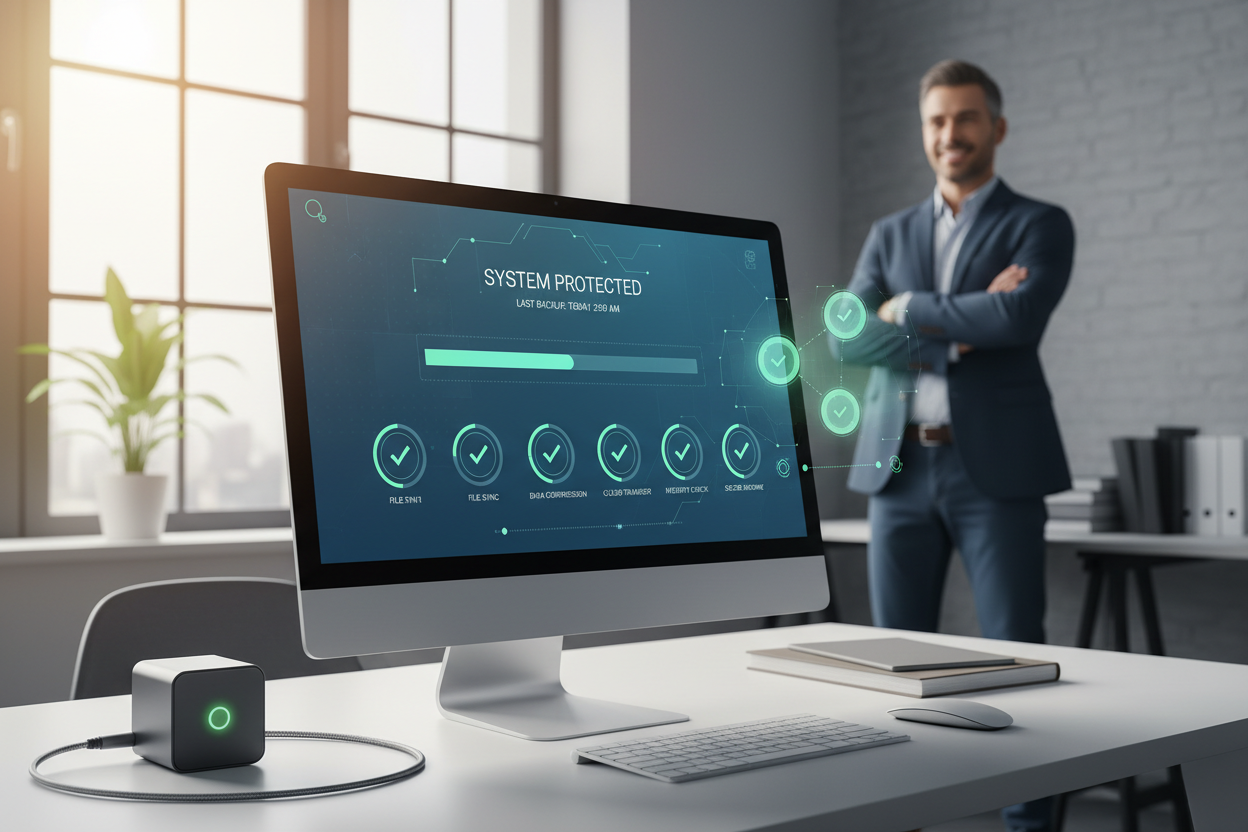
One of the first characteristics of a reliable backup is consistency. Backups need to run according to a schedule that makes sense for the business. If an important business computer contains files that change throughout the day but is backed up only occasionally, there may be a significant gap between the most recent backup and the current data. That gap represents potential data loss. A reliable system therefore starts with understanding how frequently information changes and determining how often it needs to be protected. How often should your business data be backed up? is an important question to answer before choosing a backup schedule.
A second characteristic is independence. If the backup is completely dependent on the same equipment, location, account, or system as the original data, one problem may affect both. This is particularly important when considering ransomware, hardware failure, theft, fire, or other disruptive events. A backup should provide another path to recovery rather than simply creating another copy that can disappear along with the original. This is where concepts such as isolated backups, off-site copies, and appropriate access controls become important.
A reliable backup also needs monitoring and verification. A backup system can encounter problems without the business owner realizing it. Storage can fill up. A computer can stop communicating with the backup system. Software can encounter an error. Credentials can change. A backup job can fail repeatedly while everyone assumes everything is fine. Regular monitoring can identify these problems before a recovery emergency occurs. Even more importantly, businesses should periodically consider whether the backed-up information can actually be restored. A backup that has never been tested leaves an important question unanswered: Will it work when we need it? This is one reason businesses fail at backup even when they have backup software.
Finally, reliability depends on whether the backup system matches the business’s actual needs. A small company with a few computers may have very different requirements from a business with a server, multiple employees, Microsoft 365 or Google Workspace data, and applications that are essential to daily operations. The objective isn’t to purchase the most complicated backup system available. It is to create a managed data protection plan that protects the right information at the right frequency, maintains usable recovery copies, monitors the system, and provides a practical recovery process when something goes wrong.
See How You Can Better Protect Your Business Data
If what you’ve read makes you wonder whether your business is properly protected, watch this next.
