
Buying backup software can feel like you’ve solved the backup problem. The software is installed, a schedule is created, and backups begin running. But backup software is only one part of a complete data protection process. Businesses can still experience data loss because backups fail, important systems aren’t included, errors go unnoticed, or nobody knows how to recover the information when it is needed.
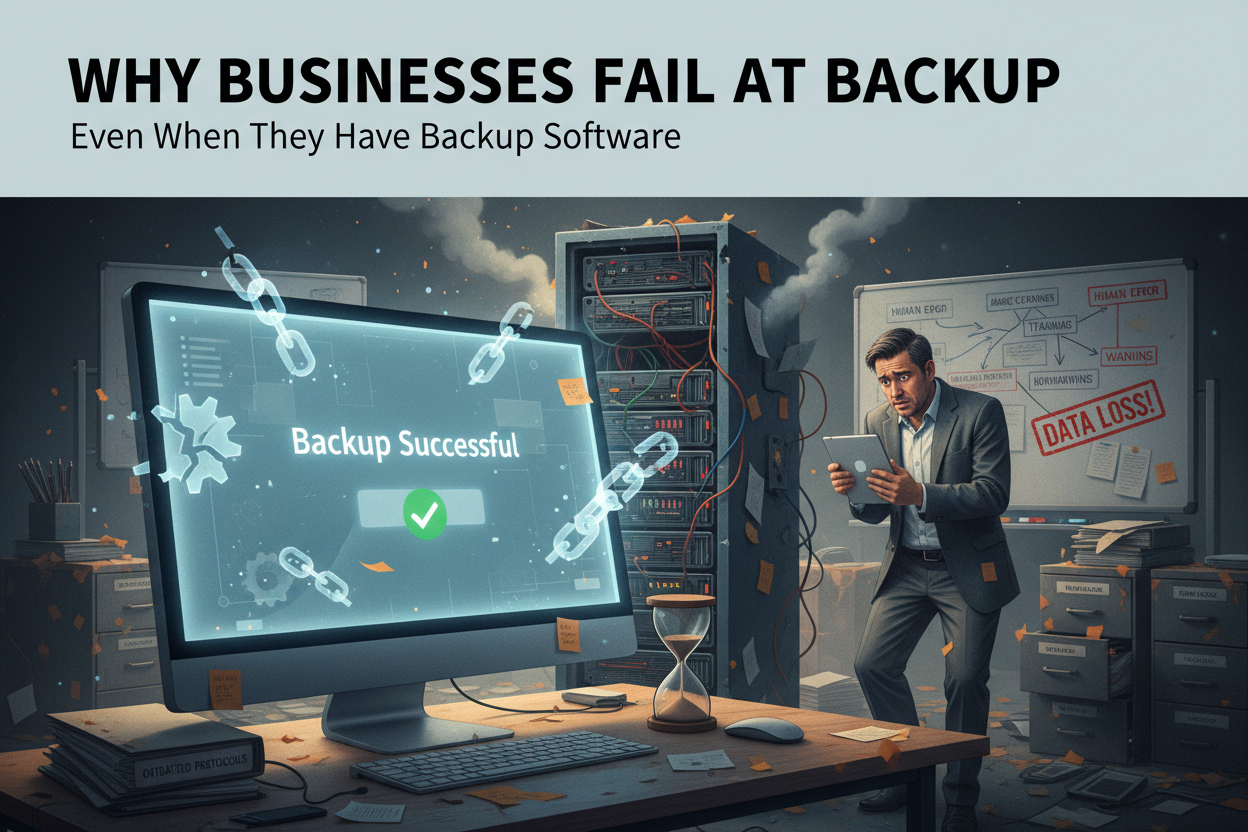
One common problem is a lack of backup monitoring. A backup application may report an error, but that doesn’t help much if nobody is reviewing the error or taking action. A computer might stop backing up because it is offline, a connection may fail, storage could become unavailable, or a configuration could change. Without someone paying attention, a failed backup can continue failing for days or even weeks. The business may believe it is protected simply because the software is still installed.
Another issue is that businesses change constantly. New computers are purchased, employees leave, new applications are introduced, and important data moves into cloud services. A backup configuration that was appropriate a year ago may no longer protect everything the company needs. Maintaining business data protection therefore requires more than installing software once. Backup schedules, protected systems, retention policies, and recovery requirements should be reviewed as the business changes.
There is also the question of whether the business can actually recover what it needs. Backup recovery testing can help uncover problems before a real incident occurs. A company may have backup copies but discover during an emergency that a particular application wasn’t included, an older version is no longer available, or the recovery process is more complicated than expected. Regular testing and recovery planning can help businesses understand their options before they are dealing with an actual crisis.
This is why managed backup services are different from simply purchasing backup software. With a managed approach, backup becomes an ongoing responsibility that includes monitoring, management, maintenance, and recovery planning. The software still has an important role, but people and processes are responsible for making sure the overall managed backup solution continues to serve the business. For many business owners, that’s the difference between saying, “We have backup software,” and being able to say, “We have a backup process that someone is actively managing.”
Don’t Wait Until Data Loss Forces Your Hand
Get a free assessment and see exactly where your business is exposed — before something goes wrong.