If you own or manage a small business, you probably know that backing up your data is important. But here’s the question many business owners never ask: Who is making sure the backups actually work? That is where managed data backup comes in. A managed backup service goes beyond simply installing backup software and hoping everything runs as expected. It involves monitoring backups, identifying problems, making sure important business data is being protected, and helping with recovery when something goes wrong. In other words, business data backup becomes an ongoing process rather than something that gets set up once and forgotten.
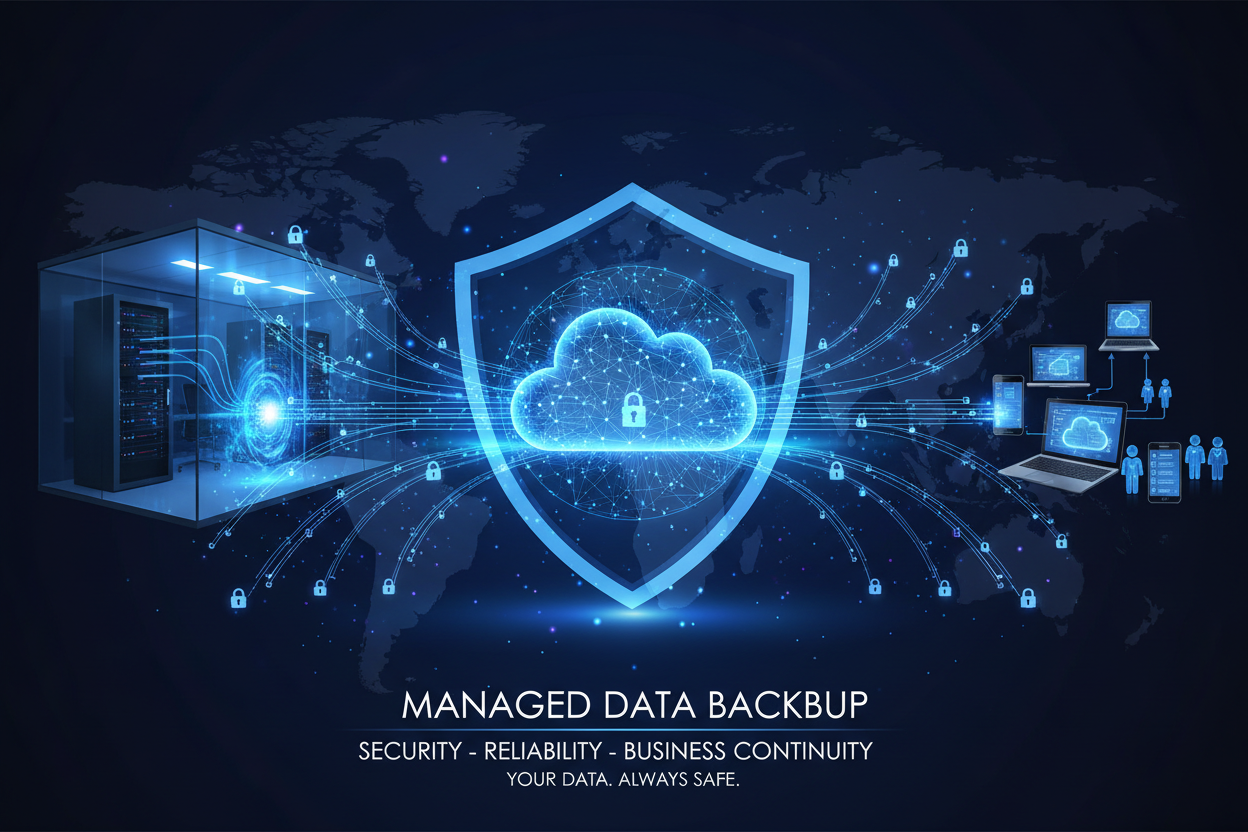
Think about all the information your business depends on every day. You may have customer records, accounting files, documents, photographs, project files, emails, databases, and other important information stored on computers and servers. You may also have important data stored in Microsoft 365, Google Workspace, OneDrive, or other cloud applications. Losing that information could be extremely disruptive. A properly designed data backup strategy helps create multiple copies of important information so that if a computer fails, a file is accidentally deleted, or something more serious happens, you have a way to recover.
One of the biggest advantages of managed backup services is that someone is paying attention to the backups for you. A backup can fail for many reasons—a disconnected drive, software problem, lack of storage space, authentication issue, or other technical problem. Without regular monitoring, a business owner might assume everything is protected when it isn’t. Backup monitoring helps identify these problems so they can be addressed before a real emergency occurs. That difference is important because a backup that hasn’t been checked is really just an assumption that your data is safe.
Another important part of managed data protection is understanding what needs to be backed up and how quickly it needs to be restored. Not every business has the same requirements. A small creative business may have years of photographs and project files, while an accounting office may depend heavily on financial records and client documents. A good business backup solution should be designed around the business rather than simply applying the same settings to everyone. The goal is to create a practical system that automatically protects important data while minimizing the amount of work required from the business owner.
So, why does your business need managed data backup? Because data protection shouldn’t depend on someone remembering to check a backup or discovering a problem after it’s too late. A professionally managed approach can provide ongoing monitoring, better planning, and a clearer path to data recovery when something goes wrong. You may never need to use your backups—and that’s the best-case scenario—but knowing they are being monitored and maintained can give you much greater confidence that your business can recover when the unexpected happens.
See How You Can Better Protect Your Business Data
If what you’ve read makes you wonder whether your business is properly protected, watch this next.