
You may have heard the term managed backup service before, but what does it actually mean? In simple terms, it means that backup isn’t something you are expected to set up and forget. A managed provider takes responsibility for helping oversee your business data backup environment. That can include configuring backup jobs, monitoring whether they complete successfully, identifying failures, maintaining the system, and helping with data recovery when necessary. The exact services vary between providers, but the basic idea is simple: someone is actively paying attention to your backups.
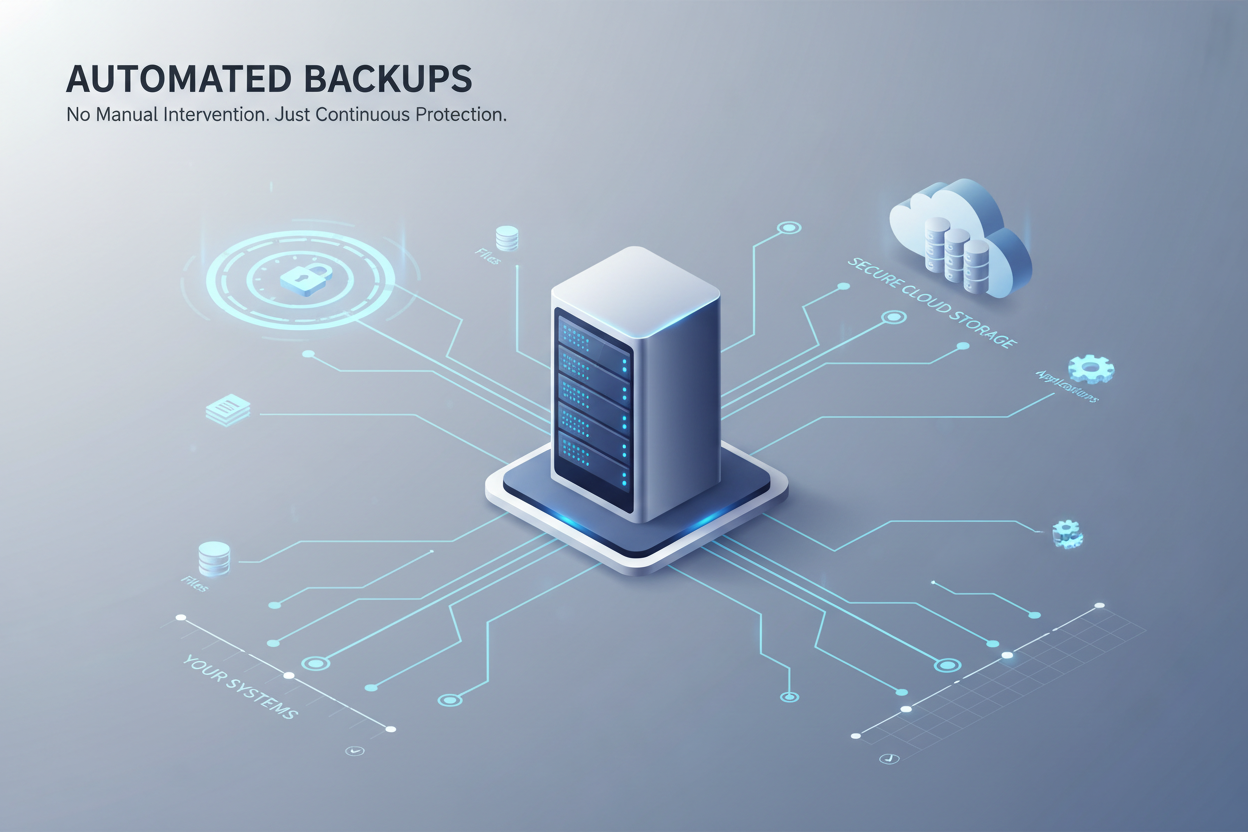
One of the most important responsibilities is backup monitoring. Imagine that your backup system has been working perfectly for months and then suddenly stops because of a software error, a disconnected storage device, or an authentication problem. If nobody is watching, the problem might continue for weeks. A managed provider can monitor backup activity and investigate failures when they occur. This is one of the major differences between having a backup system and having a managed data backup solution. The goal is to know about problems before you desperately need the backup.
A managed service can also help determine what should actually be protected. Businesses often have data in several places, including desktop computers, laptops, servers, network storage, Microsoft 365, and Google Workspace. A good business backup solution should take the entire environment into consideration rather than protecting only one computer. A managed provider can help identify important data sources, determine appropriate backup schedules, and establish retention policies that make sense for the business. This can be particularly helpful for businesses without a dedicated IT department.
Another important responsibility is helping with backup recovery. Creating a backup is only half the equation. Eventually, you may need to retrieve a deleted file, restore a computer, recover information after hardware failure, or recover from a larger disaster. A managed provider can help guide the recovery process and determine the appropriate method for getting the required information back. This is where having a clearly defined data recovery plan can make a stressful situation much easier to manage.
The easiest way to think about a managed backup service is that you aren’t simply purchasing backup technology; you’re getting ongoing attention to your backup environment. Someone needs to make sure backups are running, problems are identified, storage remains available, and recovery is possible when required. For a small business owner, that can be a significant advantage. After all, the purpose of backup isn’t to have a nice-looking backup report—it is to make sure your business can recover its important information when something goes wrong.
Don’t Wait Until Data Loss Forces Your Hand
Get a free assessment and see exactly where your business is exposed — before something goes wrong.