
Many businesses can answer “yes” when asked whether they have a backup. But having a backup and having a business backup strategy are two different things. A backup may simply be a copy of some files stored somewhere else. A strategy considers what needs to be protected, how frequently it should be backed up, how long copies should be retained, where those copies should be stored, and what the business should do when information needs to be recovered.
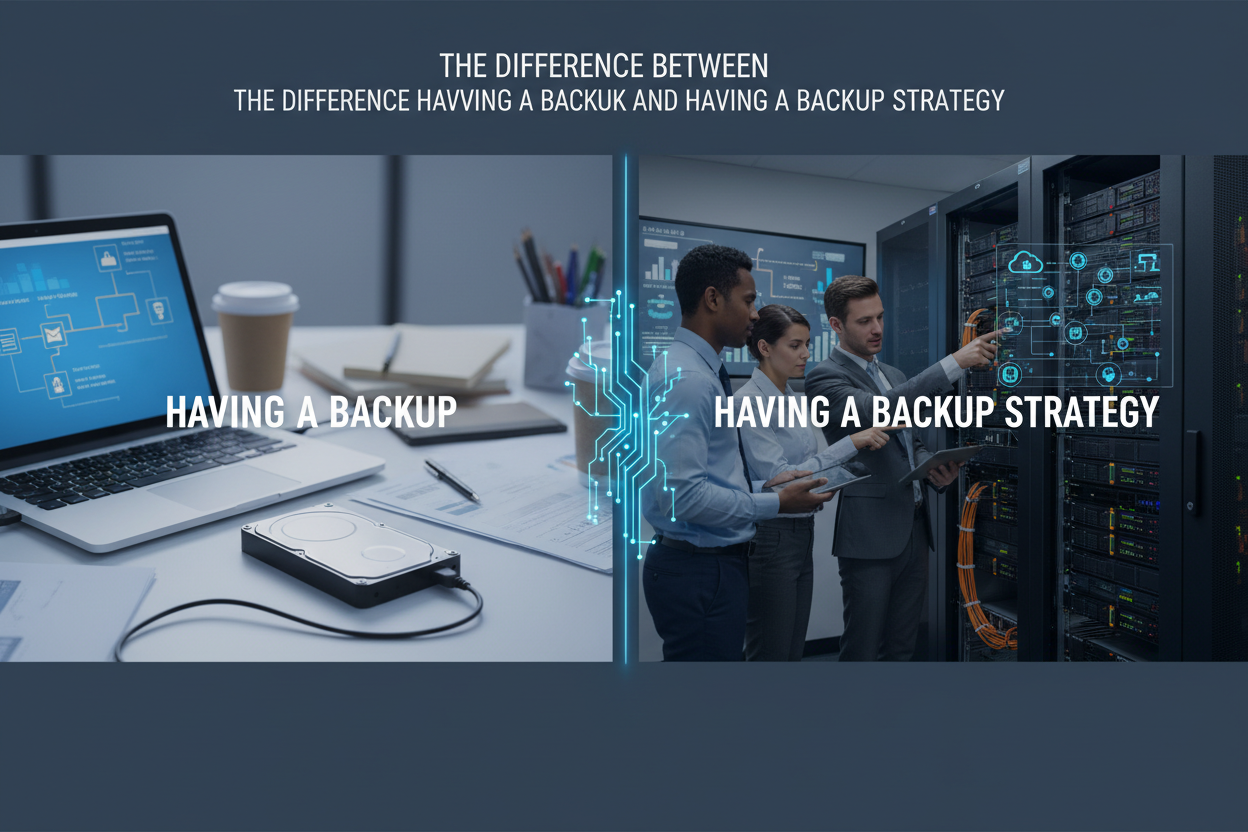
A good data backup strategy starts by identifying the information your business depends on. That could include files on employee computers, financial information, customer records, Microsoft 365 data, Google Workspace information, and data stored in business applications. Business data protection means looking at the entire environment rather than assuming that one backup location automatically protects everything.
Where backup copies are stored also matters. If the only backup is located in the same office as the original data, a fire, flood, theft, or other physical event could potentially affect both. Off-site data backup provides geographic separation between your primary data and another copy. Cloud backup is one option businesses can consider, particularly when they want protection that isn’t dependent on keeping another copy in the same physical location.
A complete strategy should also address what happens when something goes wrong. Disaster recovery planning helps a business think through questions such as which information needs to be recovered first, how much data the company can afford to lose, and how quickly critical systems need to be restored. Recovery testing is also valuable because it can reveal problems that aren’t obvious when backups are simply running in the background.
This is where managed data backup can become an important part of the overall strategy. Instead of simply having software create copies, a managed service can provide ongoing monitoring, management, maintenance, and recovery support. A managed backup strategy gives the business a more deliberate approach to protecting important information and preparing for recovery. The difference is simple: a backup is a copy of your data; a backup strategy is a plan for protecting that data and knowing what to do when something goes wrong.
Don’t Wait Until Data Loss Forces Your Hand
Get a free assessment and see exactly where your business is exposed — before something goes wrong.