
Running a small business means wearing a lot of hats. You may be responsible for employees, customers, finances, operations, and technology all at the same time. Data is part of nearly every one of those responsibilities, which makes a small business backup strategy an important part of running the company. Files, customer records, financial information, email, and other business data can be difficult or impossible to replace if they are lost.
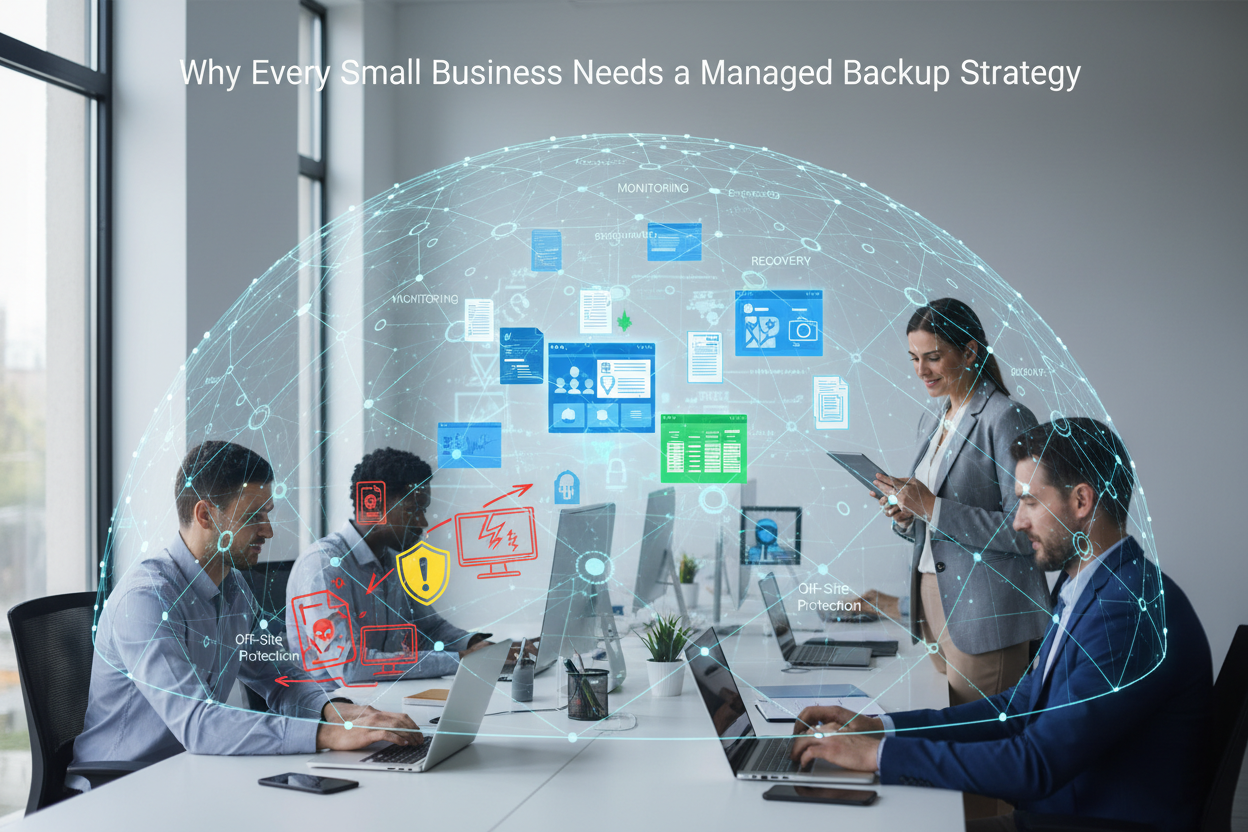
The challenge is that having backup software isn’t necessarily the same as having a backup strategy. A good managed backup strategy considers what information needs to be protected, how frequently it should be backed up, how long backup copies should be retained, and where those copies should be stored. It also considers what happens if ransomware, accidental deletion, hardware failure, or another event makes important information unavailable. The goal is to have a plan rather than simply hoping the backup software is doing its job.
This is where managed backup services for small businesses can be valuable. Instead of expecting an employee or business owner to monitor backup jobs, investigate errors, and keep track of changes to the company’s technology, a managed service makes backup an ongoing responsibility. Backup monitoring can help identify failed or incomplete backups, while ongoing management helps keep the backup process aligned with the business as systems and data change.
A complete business data protection strategy should also include recovery planning. Having another copy of a file is useful, but the business needs to know how that information can be recovered if something goes wrong. Recovery testing, appropriate retention, and off-site backup can all play a role. Different businesses have different recovery needs, so the right strategy should be based on what information is most important and how the business would be affected if it became unavailable.
For a small-business owner, a managed business backup approach can turn data protection from another task on a long to-do list into an ongoing process. Instead of simply asking, “Do we have backups?” the better question is, “Who is responsible for making sure our backups are working and our business is prepared to recover?” That shift—from having backup to actively managing backup—is what makes a managed data backup strategy worth considering.
Don’t Wait Until Data Loss Forces Your Hand
Get a free assessment and see exactly where your business is exposed — before something goes wrong.