
Let’s be honest: most business owners don’t wake up in the morning thinking, “I can’t wait to check my backup logs.” You have customers to serve, employees to manage, invoices to handle, and a business to run. That’s one reason managed business backup can be so valuable. Instead of making backup management another responsibility for someone inside your company, a managed provider can take care of the ongoing work involved in protecting your business information. The biggest benefit may simply be knowing that someone is paying attention.
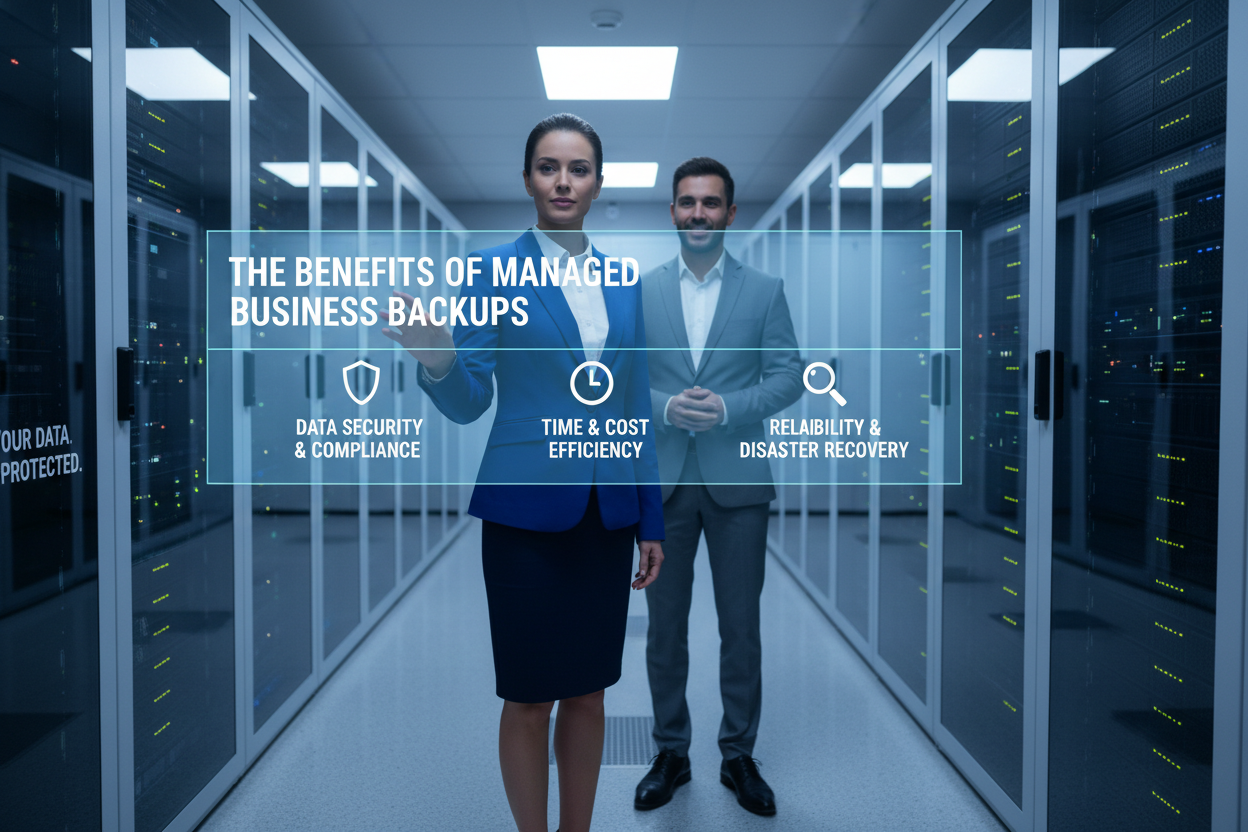
Another major advantage is backup monitoring. A backup system can fail without making much noise. A computer might be offline, a storage destination might become unavailable, or a software update could interfere with the backup process. If nobody checks, you may not discover the problem until you need to restore a file. With managed backup services, backup activity can be monitored so failures and other problems can be identified. This creates a much more proactive approach to business data protection instead of waiting for a disaster to reveal that something went wrong.
There is also the benefit of expertise. Backup isn’t always as simple as choosing a destination and clicking “Start.” Businesses need to think about what information should be protected, how frequently it should be backed up, how long backups should be retained, where copies should be stored, and how data will be recovered. A managed provider can help develop a business backup strategy based on the company’s actual needs. This can be especially useful for small businesses that don’t have an internal IT department or a dedicated backup administrator.
Another benefit is saving time. When backup management is handled internally, someone has to spend time checking reports, dealing with failed backups, troubleshooting problems, and handling recovery requests. Those hours have a cost, even if they don’t appear as a line item on the company’s financial statements. A managed data backup solution moves much of that responsibility to a provider so employees can focus on their primary jobs. It can also provide a more consistent approach to data protection because backup doesn’t depend on someone remembering to perform a task.
Perhaps the most important benefit is confidence. No backup strategy can eliminate every possible risk, but a properly managed system can make it much easier to identify problems and recover when something goes wrong. Having someone responsible for managed data protection means your backup isn’t simply sitting there in the background—you have an ongoing process designed to keep it working. For a business owner, that can mean fewer things to worry about and greater confidence that important business information has a plan behind it.
Don’t Wait Until Data Loss Forces Your Hand
Get a free assessment and see exactly where your business is exposed — before something goes wrong.